
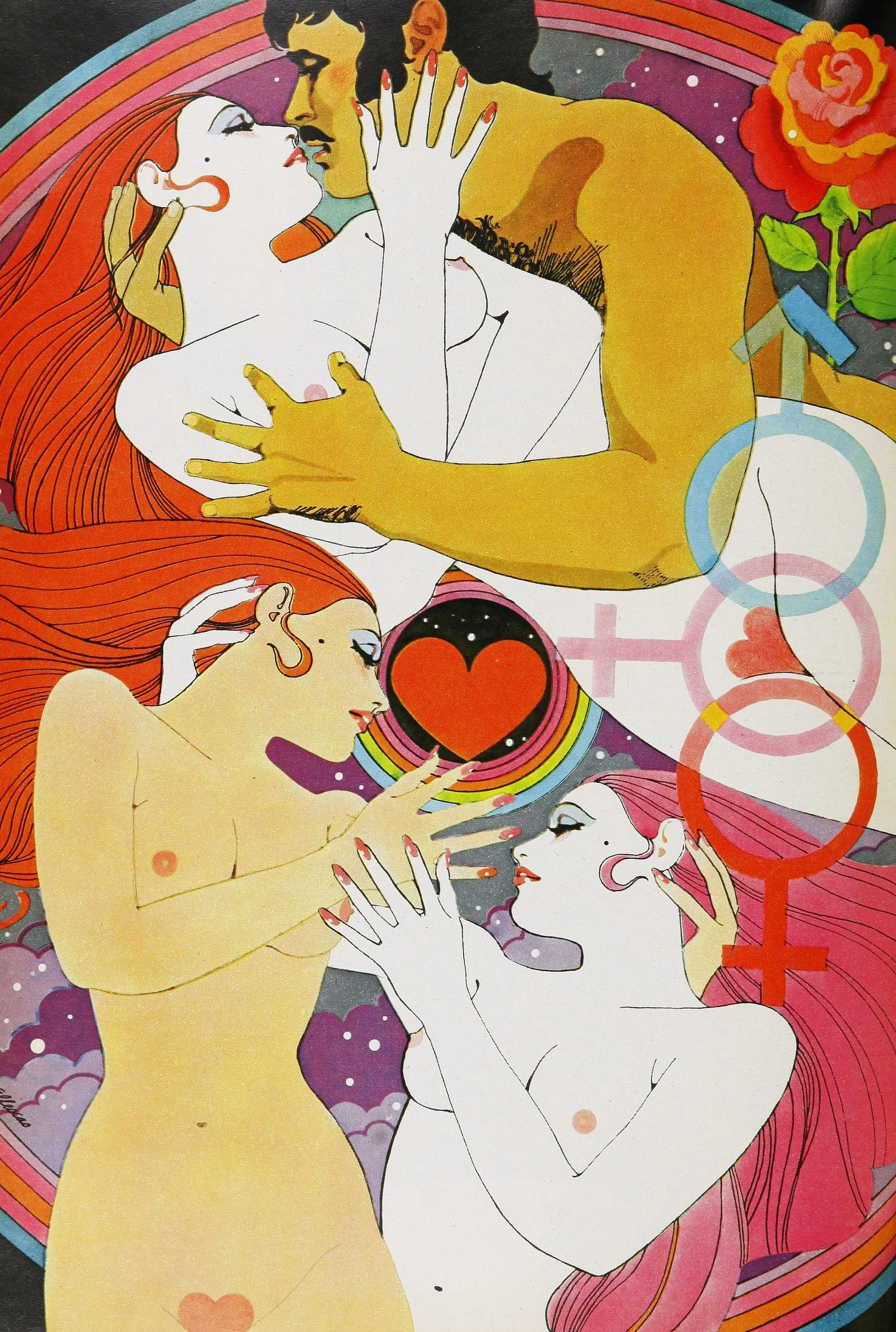
Episode 47: Richard Ellescas
From Southern California, the Filipino-Chinese-Native American Dick Ellescas found his way to art and illustration through the kindness of a series of mentors, before studying at the School of Visual Arts, Chouinard Art, and Art Center College of Design, where he later taught. His artistry led him to become a muralist in the Army and a designer of movie intros, before developing a successful freelance illustration career that lasted decades. In the 1970s, Ellescas’ skillful mixture of Art Déco, Art Nouveau, and psychedelic art became a mainstay of magazines and album covers—his romantic art the ideal accompaniment to classical music and opera. Cosmopolitan editor Helen Gurley Brown once wrote, “Los Angeles’ Dick Ellescas specializes in glamorous women, brilliant color – and we gasp (pleasurably) when his work arrives at the office.” Those glamorous women included Barbie, as he was the artist behind her illustrated boxes for over a decade. Dick continued painting until his death in 2025; this interview was recorded at his home in 2023.
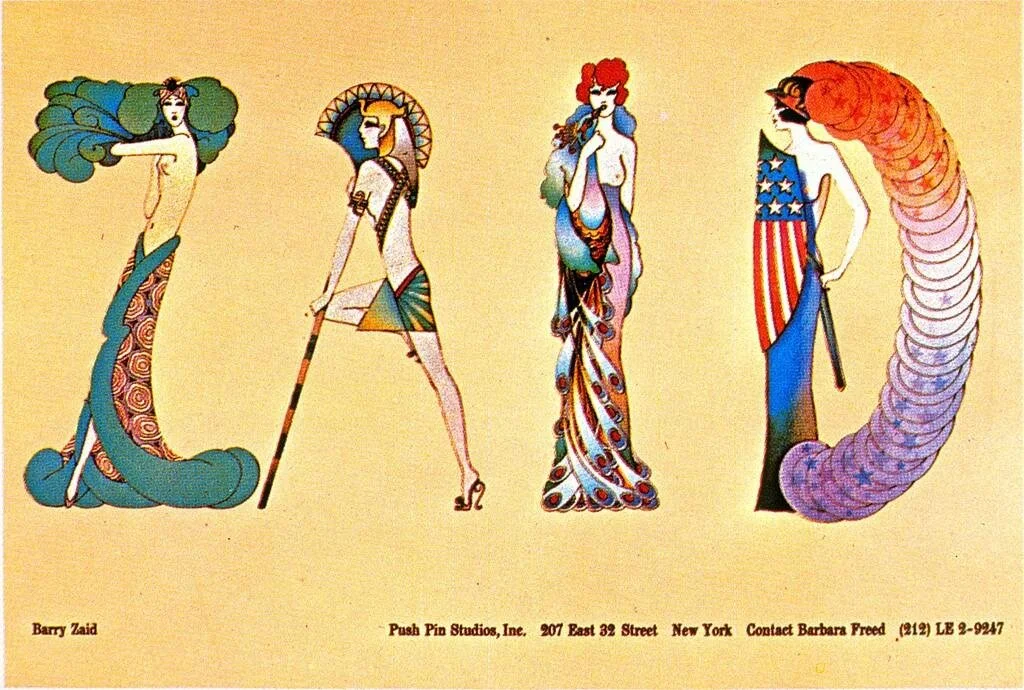
Episode 45: Barry Zaid
Canadian self-taught artist Barry Zaid had had a long, fruitful career that has taken him all over the world. While living in London in the mid-to-late-1960s, his stylized 20s-inspired art and graphics were a vital part of the nascent Art Deco revival; they can be seen on the cover of ‘The Beatles’ First’ and the book that gave the movement its name, Bevis Hillier’s ‘Art Deco.’ Over the decades, Barry worked for every major magazine and newspaper, from the Globe & Mail to Seventeen, Sesame Street to New York, Esquire to Ladies’ Home Journal. Zaid has designed hundreds of logos, packaging for a range of products, album covers, billboards, and also worked on many books.
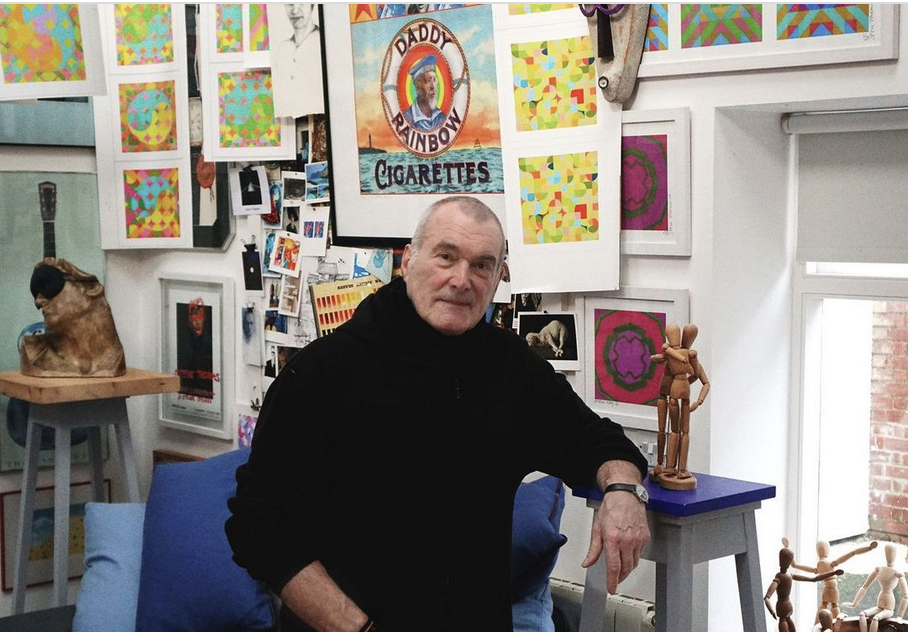
Episode 42: Steven Thomas
After studying at the Chelsea School of Art in the mid-60s, Steve started his career in Swinging London, modelling, painting the façade of Chelsea boutique Dandie Fashions, and designing album artwork for bands, including the Rolling Stones. In the late 1960s, a girlfriend introduced him fashion illustrator-turned-fashion designer Barbara Hulanicki and her husband Stephen Fitz-Simon of Biba, which began a very fruitful and inspirational collaboration. He began working with Biba first on smaller projects, like a makeup poster, then a children’s department at the Kensington Church Street store and the Biba concession at Bergdorf Goodman, and finally, when Biba took over a whole department store on Kensington High Street, Steve and his partner Tim Whitmore were hired to create all of the designs for the entire Big Biba store, including interiors, signage, giant display items and graphic designs for the hundreds of own-brand product lines. After Big Biba closed in August 1975, Whitmore-Thomas began working extensively with Paul McCartney—designing his company’s headquarters along with numerous private homes—as well as launching a highly lucrative advertising and branding business for some of the largest brands in the world, like Guinness, Harrods, Lucky Strike, Pepsi, and Virgin. In the early 2000s, Whitmore-Thomas separated, with Steve returning to his first love: painting.